
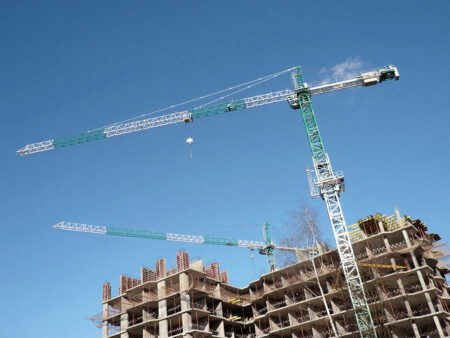
 Most people hear “infrastructure spending” and think of repaving highways or bridges, maybe a politician at a ribbon-cutting. It often fades into the background of the news.
But here’s what isn’t getting enough attention: the current wave of federal infrastructure investment isn’t just building roads. It’s quietly restructuring the economics of entire regions, rewriting the playbook for how contractors staff their crews, and creating supply chain pressures that most people outside the industry don’t see coming. As the Institute for Critical Infrastructure Technology recently put it, the United States is undertaking one of the largest sustained construction efforts in its history, and most of it is happening outside the scope of daily headlines.
The Scale Is Bigger Than You Think
The Infrastructure Investment and Jobs Act (IIJA) committed $1.2 trillion over several years to rebuilding America’s physical systems. That money is currently being distributed to state departments of transportation, water authorities, power grid upgrades, and broadband expansion projects nationwide.
The Brookings Institution expects about 912,000 new construction and extraction jobs tied to infrastructure over the next decade—reflecting contracts already awarded and projects underway.
What sets this cycle apart is overlap: the IIJA, CHIPS and Science Act, and Inflation Reduction Act are all fueling capital into the same sectors. Highway, semiconductor, and renewable energy projects now compete for the same workers, equipment, and fuel. As more owners require lower-emission practices, contractors must plan for renewable diesel mandates.
The Hiring Crunch Nobody Prepared For
Contractors aren’t struggling for lack of work. They’re struggling because there’s an abundance of it.
The construction industry was already running a labor deficit before this wave of spending hit. An aging workforce, years of underinvestment in trade education, and competition from other sectors like warehousing and logistics had already thinned the talent pool. Now layer on trillions in new project demand, and you’ve got a genuine crisis.
Contractors who previously bid on a handful of projects annually now see many more opportunities. The challenge is finding enough qualified operators, welders, pipe fitters, and truck drivers. Smaller local firms are feeling the squeeze hardest, unable to match the wages offered by larger national contractors, attracting talent away.
This impacts project timelines. A water main replacement that was expected to take six months may stretch to 10. A bridge job planned for Q1 may not mobilize until Q3. These delays add up, costing taxpayers more.
Equipment and Fuel: The Pressure Points No One Talks About
When projects multiply, so does the demand for heavy equipment. Excavators, bulldozers, cranes, and paving machines are all seeing extended lead times. Some contractors report waiting six to nine months for new equipment deliveries. That’s forced many to rely on rental fleets, which pushes rental rates higher across the board.
But the real pressure point isn’t the iron. It’s what keeps it running.
Every piece of heavy equipment on a job site burns fuel. Diesel is the lifeblood of infrastructure construction, and when you’ve got hundreds of new projects spinning up across a state, the demand for off-road diesel doesn’t just increase. It spikes.
Many contractors, especially in remote or rural areas, find traditional fuel models inadequate for current demands. Pickup trucks with 100-gallon tanks can’t meet the needs of sites that use up to 500 gallons daily. Contractors now use mobile on-site refueling services that deliver directly to field equipment. If equipment runs dry due to delayed delivery, crews stand idle, incurring costs.
On-site fuel tank rentals help buffer supply disruptions. Staging a 2,000- or 5,000-gallon tank at the job site reduces reliance on daily deliveries and enables better negotiation on bulk orders.
DEF Demand Is Climbing, Too
Modern diesel engines require Diesel Exhaust Fluid (DEF) to meet EPA standards. Each Tier 4 Final engine consumes DEF at a rate of 2-3% of diesel use. While small per machine, this adds up rapidly across fleets.
Contractors who’ve planned for diesel but not for DEF delivery are learning the hard way that running out of DEF triggers an engine derate. The machine doesn’t just throw a warning light. It physically reduces power output, and in some cases, it shuts down entirely. On a project with tight deadlines and liquidated damages clauses, a DEF shortage can turn into a five-figure problem in a single afternoon.
Small Towns, Big Changes
The infrastructure boom impacts more than just job sites. When a major project arrives in a rural county, it delivers a noticeable, temporary economic boost to hotels, restaurants, hardware stores, and gas stations.
This matters because many of these communities have been watching their economic base erode for decades. A two-year bridge project doesn’t reverse that trend, but it does inject cash into local circulation in a way that few other federal programs can match.
There’s a flip side, though. These same communities often lack the infrastructure to handle the surge. Housing stock is tight. Roads leading to job sites weren’t designed for heavy truck traffic. And local fuel suppliers may not have the capacity to keep up with demand from a large construction operation that just set up shop.
Contractors who plan diesel delivery, equipment staging, and workforce housing in advance tend to run smoother operations and maintain better community relations. Proper fleet fueling reduces congestion at local gas stations and saves driver time.
What Smart Contractors Are Doing Differently
The contractors who are winning in this environment aren’t necessarily the biggest or the best-capitalized. They’re the ones who recognized early that this cycle requires a different operational approach.
They’re locking in fuel contracts before mobilization rather than scrambling for spot rates once on site. They’re pre-positioning storage tanks, arranging dedicated delivery schedules, and using remote monitoring systems that trigger automatic refills. This removes the guesswork from fuel management, which matters when running multiple sites. They’re building supplier relationships for scalability.
They’re also more selective about which projects to bid on. Taking on too much work with limited resources leads to overruns, quality issues, and strained client relationships. Success means picking projects you can properly staff and execute from day one.
What Comes Next
The current infrastructure cycle is not a short surge. IIJA funding lasts through 2030. Adding semiconductor and clean energy investments means a sustained elevated demand for years. As Builder Outlook noted, infrastructure projects involve multi-year timelines and large contracts—pressures on labor and materials are now a structural shift, not a temporary spike.
That means the pressures we’re seeing now, on labor, on equipment, on fuel and materials, aren’t going away. If anything, they’ll intensify as more projects move from the planning phase into active construction.
For contractors, the takeaway is that operational efficiency is no longer a nice-to-have. It’s a competitive requirement. The firms that figure out how to manage their supply chains, fuel their equipment reliably, and keep their crews productive are the ones that will still be standing when this cycle matures.
For local economies, the opportunity is real, but it requires active participation. Communities that make themselves easy to work in and have the housing, services, and supply infrastructure to support construction operations will capture more of the economic benefit.
This boom is happening whether anyone’s ready for it or not. The question is who’s going to be positioned to make the most of it.
