
At Hart Fueling, safety is our number one priority. Not only do we hold our team to the highest of standards when it comes to fuel management, but we also work hard to educate our clients who frequently utilize and store fuel at construction sites.
Construction Site Fuel Storage Safety
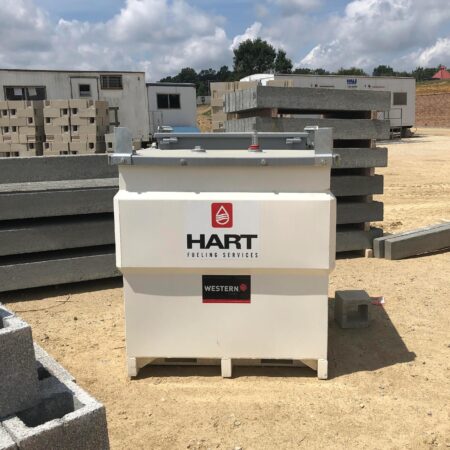 Approved Containers. Always store fuel in a D.O.T. approved storage container on level ground. We always recommend a double-walled fuel tank so you have a backup in case one of the walls becomes damaged. Cube-style tanks are also preferable to cylindrical tanks due to their sturdier shape that is much harder to knock over.
- Steady Temperature. Avoid storing fuel in locations with extreme temperature fluctuations. Fuel should be stored at room temperature, away from any heat sources (including direct hits from the sun).
- Lock It Up. An important part of maintaining safety at a construction site is to make sure only the right people have access to it. Always remember to lock up your fuel tanks or cabinets.
- Use a Secondary Containment Berm. Because of human error and other factors outside of your control, spills are impossible to completely eliminate. A containment berm can prevent a fuel spill from getting out of control.
- Give Some Distance. Store fuel at least 50 feet away from any ignition sources, such as pilot lights. This is especially important for gasoline because it is heavier than air which means vapors can travel and ignite easily.
- Know Who to Call. Your parents always left emergency numbers on the fridge – now it’s time to carry on the tradition. If a fuel spill were to happen, you need to know who to call. This will be a specific city or environmental agency in your area. Find the number and always have it readily available in case of disaster.
- Avoid Hose Kinking. Keep an eye on your fuel hose, even if you are not actively fueling. Any kind of kinking or twisting can cause a crack, which can lead to a spill.
- Don’t Forget the Cap. When fueling, it is easy to take the cap off the fuel tank, fuel the equipment, and forget to put the cap back on. Always remember to replace the cap. When water gets into your fuel, it becomes a costly mistake. Not only will the fuel require special treatment if water leaks into the tank, but the contaminated fuel could actually ruin your equipment.
 Have a Forklift Readily Available. Keeping a forklift available at all times is paramount to having a safe and efficient job site. Many contractors will have a forklift available at the start and end of their projects, but keeping one on the site at all times will ensure that you can move fuel tanks easily at any time in case of an emergency.
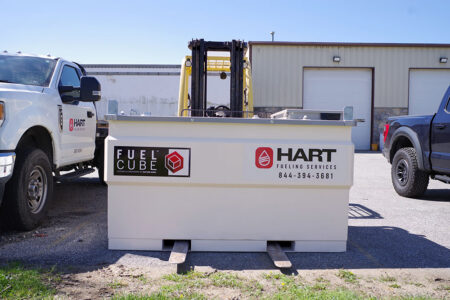 Have a Forklift Readily Available. Keeping a forklift available at all times is paramount to having a safe and efficient job site. Many contractors will have a forklift available at the start and end of their projects, but keeping one on the site at all times will ensure that you can move fuel tanks easily at any time in case of an emergency.
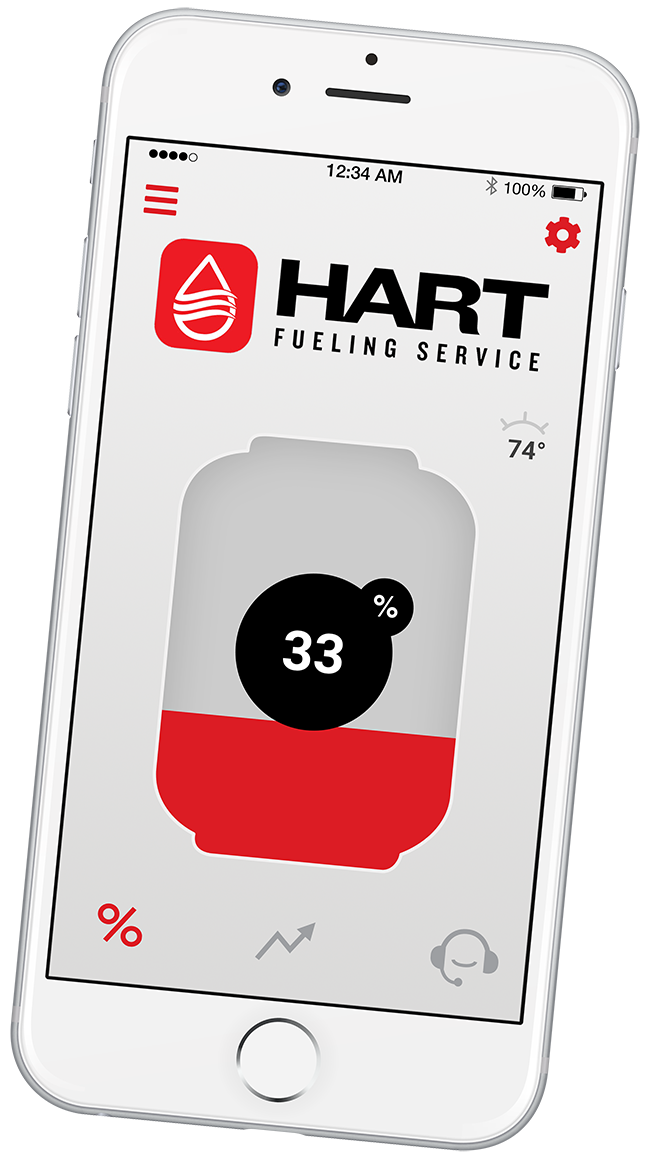
View the level of your tank. Anywhere, anytime.
All Hart Fueling Fuel tanks come equipped with remote monitoring which can be accessed anytime through an app.


General Fuel Safety Tips
- Wash It Off. If an accidental spill occurs while pumping, wash your skin thoroughly. If possible, change your clothes right away. Do not light anything flammable unless you have made sure all the fuel has been removed.
- Shut Your Equipment Off. While rare, there are instances of static electricity igniting during a regular fuel-up. To avoid any chance of this, turn your vehicle or equipment off every time.
Transporting Fuel
 Transporting Fuel
- Close the Valve. When transporting fuel, close the shut-off valve on any equipment or vehicle.
- Keep Upright. Always transport fuel upright and secure it so it cannot shift while moving.
Disposal of Fuel
- Talk to Local Authorities. Your local government will be able to point you in the right direction when it comes to fuel disposal in your area.
If you have additional questions about construction site fuel safety, need to schedule fuel delivery to your site, or are interested in fuel tank rentals, please contact our team today!
